The Temple of Kukulkan
A 24-metre step-pyramid built as a calendar in stone — and the reason Chichén Itzá is one of the New Seven Wonders of the World.
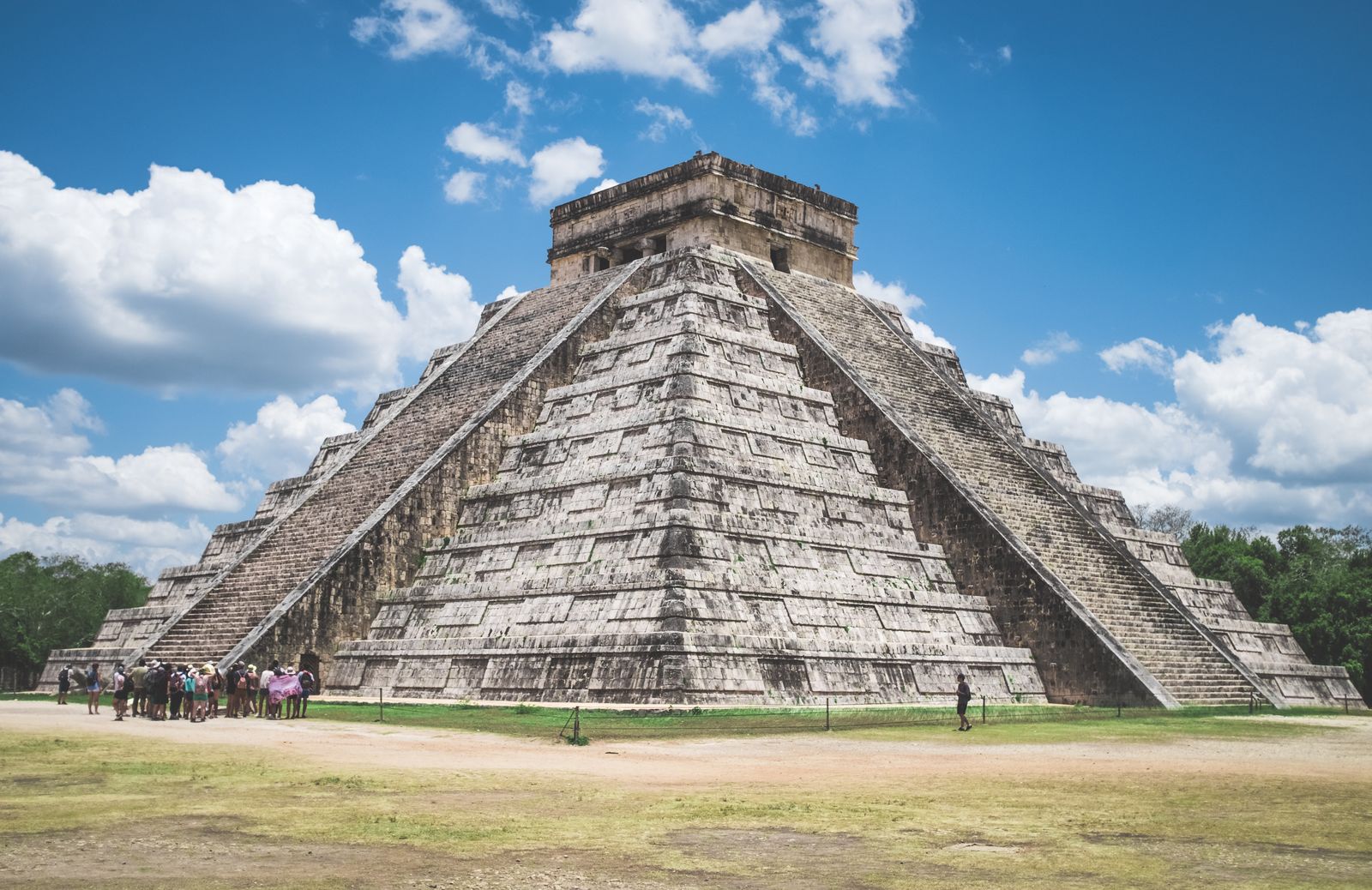
A calendar in stone
El Castillo has four staircases, each with 91 steps. Add the platform at the top and you get 365 — one for every day of the solar year. Its nine terraces are split by each staircase into 18 sections, matching the 18 months of the Maya Haab' calendar. Its 52 flat panels echo the 52-year Calendar Round when the Maya solar and ritual calendars realign.
The descending serpent
Twice a year — at the spring and autumn equinox — the setting sun casts a series of triangular shadows down the north-west staircase. Combined with the huge stone serpent-heads at its base, the illusion is of Kukulkan, the feathered serpent, descending the pyramid. Tens of thousands of visitors gather each March to see it.
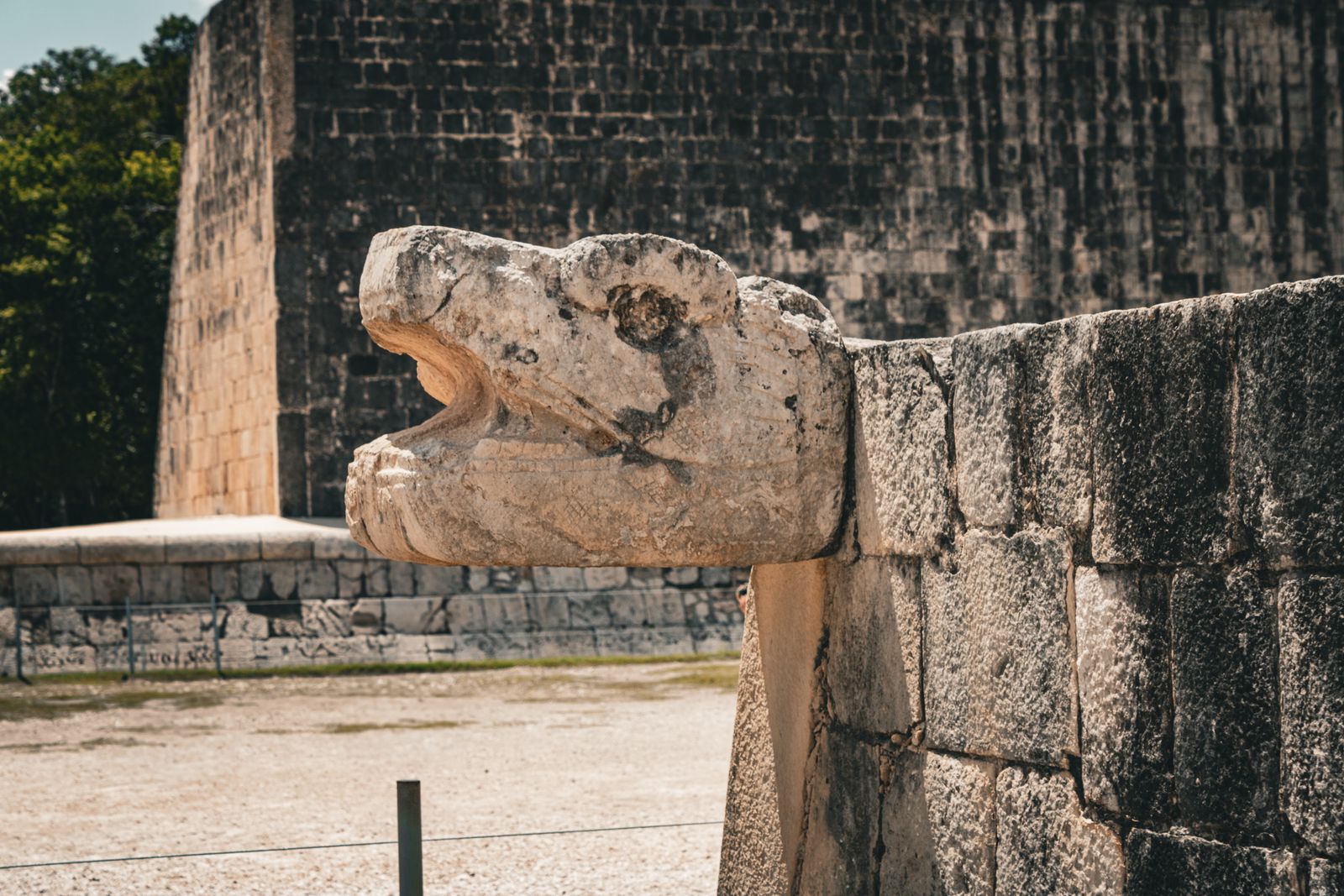
Feathered-serpent carvings echo the Kukulkan iconography that runs through the whole site.
Can you climb it?
No — climbing has been prohibited since 2006 to protect the structure and after a fatal fall. Every stone you see today can be admired only from the ground. Please don't attempt to climb; it is both illegal and disrespectful to the site.
The pyramid within
Inside El Castillo is an earlier, smaller pyramid, containing a red-jaguar throne inlaid with jade eyes. In 2015 researchers using electrical-resistivity imaging discovered a large cenote directly beneath the pyramid — suggesting the whole structure was deliberately placed above a source of sacred water.