A thousand years of the Maya
From a settlement beside a sacred well to a UNESCO World Heritage Site voted one of the New Seven Wonders — the long story of Chichén Itzá.
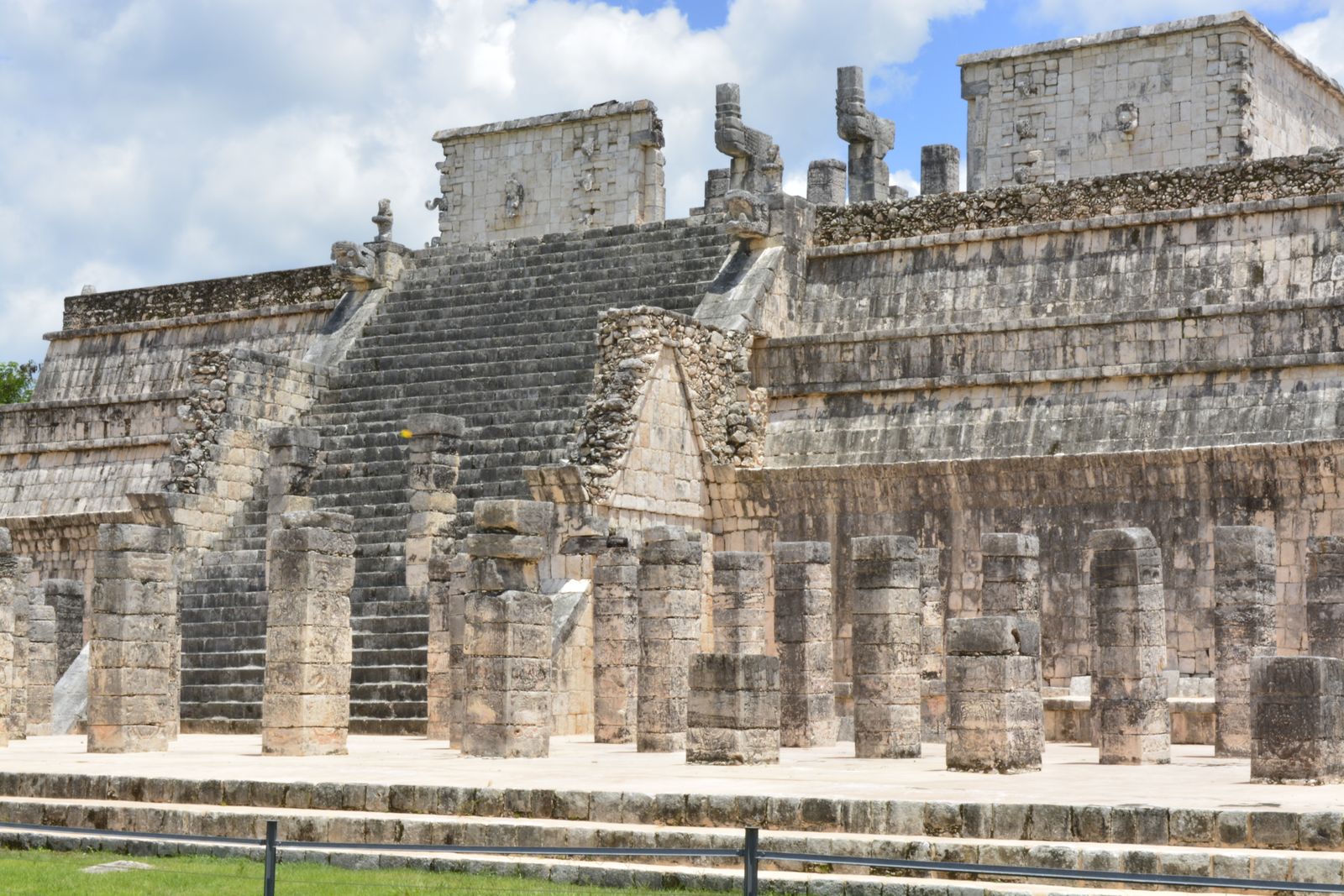
The Temple of the Warriors, showing the influence of central Mexican Toltec architecture.
Timeline
- c. 500 CE
Founding of Chichén Itzá
The Itzá, a Maya group, settle around the great cenote — a natural sinkhole considered sacred and a vital source of fresh water.
- 800 – 900 CE
Rise of the classic city
The Maya build the earliest ceremonial precincts. Astronomy, mathematics and the calendar are already highly developed.
- 900 – 1100 CE
The Maya-Toltec peak
Chichén Itzá becomes the dominant power in the northern Yucatán. El Castillo, the Great Ball Court and the Temple of the Warriors are built in this period.
- c. 1200 CE
Decline
Political power shifts to Mayapán. The great city is gradually abandoned, though pilgrimages to the Sacred Cenote continue.
- 1533
Spanish contact
Francisco de Montejo briefly attempts to establish a Spanish capital at Chichén Itzá — and is driven off by the local Maya.
- 1841
Rediscovery
American explorer John Lloyd Stephens and artist Frederick Catherwood publish drawings and descriptions that bring the ruins to the wider world.
- 1988
UNESCO World Heritage Site
Chichén Itzá is inscribed by UNESCO for its outstanding universal value as a masterpiece of Maya-Toltec civilisation.
- 2007
New Seven Wonders of the World
El Castillo is voted one of the New Seven Wonders in a worldwide public poll.
Why does the city matter?
Chichén Itzá is one of the largest and best-preserved Maya cities. Its buildings encode astronomical knowledge, its cenote yielded extraordinary offerings, and its blend of Maya and central-Mexican styles tells the story of a Mesoamerica that traded, travelled and mixed ideas over vast distances. It's not a lost city — Yucatec Maya communities still live all around it today.